


Can Air Pollution Worsen Children’s Allergies and Cough?
As autumn turns to winter, Taiwan’s seasonal haze and air pollution often return. Many parents notice that their children begin rubbing their eyes, sneezing, or coughing whenever they go outdoors.
These symptoms are commonly attributed to changing temperatures or dust mite allergies. However, another possible trigger is often overlooked: air pollution and the fine particles children breathe every day.
Can Air Pollution Make Children’s Allergies and Cough Worse?
Air pollution can irritate the eyes, nose, throat, and respiratory tract. Children may be particularly vulnerable because they generally breathe more air relative to their body weight than adults, while their lungs and immune systems are still developing.
Daily air may contain a complex mixture of pollutants, including:
- Traffic-related PM2.5 and ultrafine particles
- Vehicle exhaust and combustion particles
- Industrial emissions and oily aerosols
- Road dust, brake-wear particles, and metal-containing particles
- Gaseous pollutants and volatile organic compounds (VOCs)
PM2.5 can travel deep into the lungs, while even smaller particles may penetrate further into the respiratory system. Repeated exposure has been associated with respiratory irritation and may aggravate conditions such as asthma and allergic rhinitis.
When a child’s respiratory tract is already irritated, coughing, sneezing, nasal congestion, and other allergy-like symptoms may become more noticeable—especially during Taiwan’s autumn and winter air pollution season.
Why Do Many Children Refuse to Wear PM2.5 Masks?
Many parents purchase high-filtration masks only to find that their children remove them after a few minutes.
Common complaints include:
- “It’s too hot.”
- “I can’t breathe comfortably.”
- “The mask touches my lips.”
- “It feels too tight.”
- “I don’t want to wear it.”
A children’s PM2.5 mask must offer more than filtration performance. It also needs to be breathable, lightweight, comfortable, and properly sized. After all, even a high-performance mask cannot provide consistent protection if a child refuses to keep it on.
What Makes the Kids’ PM2.5 Mask Different?
The key feature of the kids’ PM2.5 mask is its physical microporous membrane filtration technology.
Physical filtration of submicron particles
Unlike filtration systems that rely primarily on electrostatic attraction, the microporous membrane acts as a fine physical barrier that captures airborne particles.
Under specified laboratory test conditions, the membrane has demonstrated up to 99% filtration efficiency for 0.075-micron particles. It is designed to help reduce exposure to PM2.5, fine aerosols, cooking-oil particles, and airborne particles that may carry microorganisms.
Actual protection also depends on correct sizing, facial fit, condition of the mask, and how it is worn.
Breathable and comfortable for children
The microporous structure allows air to pass through while filtering fine particles. Its low breathing resistance helps make the mask more comfortable for school, commuting, outdoor activities, and other periods of extended wear.
The three-dimensional design creates space around the mouth, reducing direct contact with the lips and making it easier for children to speak and breathe comfortably.
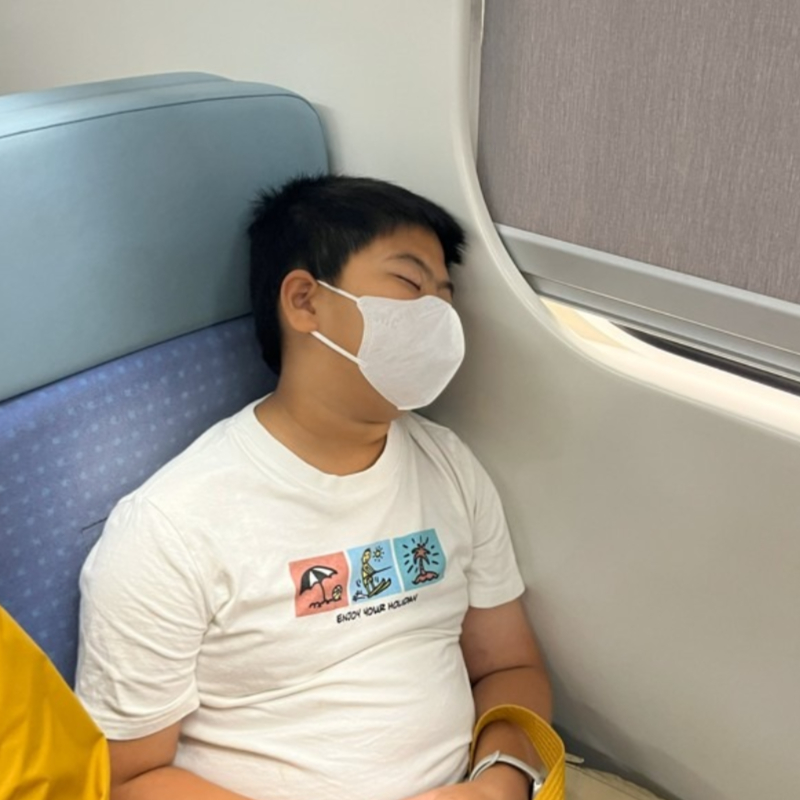
For naps or sleep, children should follow school, healthcare, and product-safety guidance. A child should not wear a mask while sleeping without appropriate adult supervision or advice from a healthcare professional.
Worried That Your Child May Lose a Premium Mask?
Some parents hesitate to purchase a higher-quality children’s mask because they worry it may be lost at school. However, this can also become an opportunity to help children learn responsibility and care for their personal belongings.
Create a sense of ownership
Prepare a dedicated mask case, storage pouch, or breakaway safety lanyard suitable for the child’s age. Explain that the mask is an important piece of personal protective equipment—not something to treat like disposable tissue.
This helps children understand why the mask matters and encourages them to take responsibility for keeping it clean and safe.
Reusable protection can be more economical
The physical membrane mask is designed for repeated use when cleaned and maintained according to the manufacturer’s instructions.
Depending on the specific model and care guidance, the mask may be gently cleaned with water or disinfected using the recommended alcohol concentration. Proper reuse can help reduce the cost per wear while also creating less disposable waste.
Replace the mask if it becomes damaged, deformed, heavily soiled, difficult to breathe through, or no longer fits securely.
Frequently Asked Questions About Kids’ PM2.5 Masks
Can air pollution make my child’s allergies worse during autumn and winter?
Yes. Air pollution may irritate the respiratory tract and aggravate symptoms associated with asthma or allergic rhinitis. Taiwan’s seasonal haze may contain PM2.5, ultrafine combustion particles, traffic pollution, oily aerosols, and other pollutants.
However, persistent coughing, wheezing, breathing difficulty, fever, or nighttime symptoms may have other causes. Parents should consult a pediatrician rather than assuming that air pollution is the only trigger.
What is the best breathable PM2.5 mask for children?
Look for a children’s mask that combines:
- Verified particle-filtration performance
- Low breathing resistance
- A size designed specifically for children
- A secure fit around the nose, cheeks, and chin
- A lightweight, skin-friendly inner layer
- Enough space around the mouth for comfortable speaking and breathing
A physical microporous membrane mask, such as the kids’ PM2.5 mask, is one option for parents seeking both high-efficiency filtration and comfortable daily wear.
Can children wear a PM2.5 mask all day?
A child may wear a properly fitted, breathable mask during school, commuting, and outdoor activities, with suitable breaks in a clean and safe environment.
Parents and teachers should pay attention to discomfort, dizziness, breathing difficulty, overheating, or skin irritation. The mask should be removed immediately if the child experiences breathing problems.
Masks should not be worn during strenuous exercise, swimming, or unsupervised sleep.
Can a children’s PM2.5 mask block cooking fumes and traffic exhaust?
A high-efficiency particle-filtering mask may help reduce exposure to PM2.5, soot, oily aerosols, and other airborne particles found in cooking fumes and traffic pollution.
However, particle-filtering masks do not necessarily remove gaseous pollutants, VOCs, carbon monoxide, or all odors. Being able to smell exhaust or cooking fumes does not automatically indicate that the particle filter has failed.
Can the kids’ mask be washed and reused?
The microporous membrane mask is designed for reuse and may be cleaned according to the instructions for the specific product model. Follow the recommended washing method, alcohol concentration, drying procedure, usage period, and replacement schedule.
Avoid vigorous rubbing, wringing, or any cleaning method not approved by the manufacturer, as improper handling may damage the mask’s structure or affect its fit.
What if my child loses a reusable mask at school?
A labeled storage pouch, dedicated mask case, or age-appropriate breakaway lanyard can help children keep track of their masks. Turning mask care into a daily routine can also teach children to value and protect their personal belongings.
Because a reusable mask can be worn multiple times when properly maintained, its long-term cost and environmental impact may compare favorably with frequently replacing disposable masks.
Final Takeaway: The Best Kids’ PM2.5 Mask Is One They Can Wear Correctly
A children’s PM2.5 mask should balance three essential qualities:
- Reliable particle filtration
- Comfortable breathing
- A secure, child-specific fit
High filtration efficiency matters—but comfort determines whether a child will actually keep the mask on.
The goal is not simply to give children a mask. It is to provide respiratory protection they can wear properly and comfortably throughout their daily activities.