



PM2.5 Pollutants Can Travel More Than 1,000 Kilometers
Tainan Air Quality Special Report 2-2》PM2.5 Pollutants Can Travel More Than 1,000 Kilometers
December 27, 2025, 11:00 a.m. | Special Report by Reporter Tsai Wen-Chu, Tainan
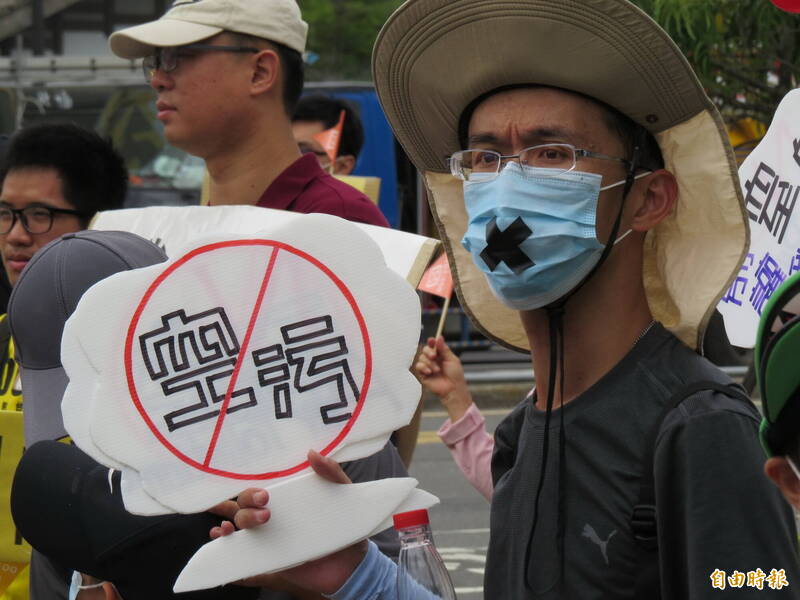
In the past, whenever Tainan entered the autumn and winter air-pollution season, PM2.5 levels frequently exceeded 100, prompting public protests as residents demanded cleaner air. (File photo)
What is PM2.5?
According to the Tainan City Environmental Protection Bureau, there are many pollutants present in the air. Among them are dust-like particles suspended in the atmosphere, known as particulate matter (PM). These particles vary in size, and those with a diameter of less than or equal to 2.5 micrometers (μm) are classified as fine particulate matter, or PM2.5. The concentration of PM2.5 is measured in micrograms per cubic meter (μg/m³).
The Environmental Protection Bureau explained that the diameter of PM2.5 is less than one-twenty-eighth the thickness of a human hair. PM2.5 particles can remain suspended in the air for several weeks and can be transported over distances exceeding 1,000 kilometers. PM2.5 can originate from both natural and human activities, including dust particles lifted from exposed ground by wind, emissions from boilers, and exhaust from motor vehicles. In addition, chemical substances such as sulfates, nitrates, and ammonium compounds can undergo a series of chemical transformations and photochemical reactions in the atmosphere, eventually forming PM2.5 particles.
Suspended particulate matter enters the human body through the nose, throat, and larynx. Particles larger than 10 micrometers can usually be filtered out by the nasal cavity, while smaller particles can pass through the trachea and bronchi, reach the alveoli, and be absorbed into the body, posing health risks. Long-term exposure to air pollutants increases the risk of respiratory diseases and mortality.
The Environmental Protection Bureau reminds the public that when exposed to high concentrations of PM2.5, wearing a mask is the simplest way to reduce harm. N95 respirators are recommended due to their effective filtration and adsorption capabilities. When outdoor air quality is poor, staying indoors can help reduce exposure. It is advised to minimize opening windows and use air purifiers equipped with high-efficiency filters to improve indoor air quality. Additionally, when burning incense for religious worship at home, residents are encouraged to reduce the frequency, open doors and windows, and use exhaust ventilation systems to enhance indoor air circulation.
Source: Liberty Times

