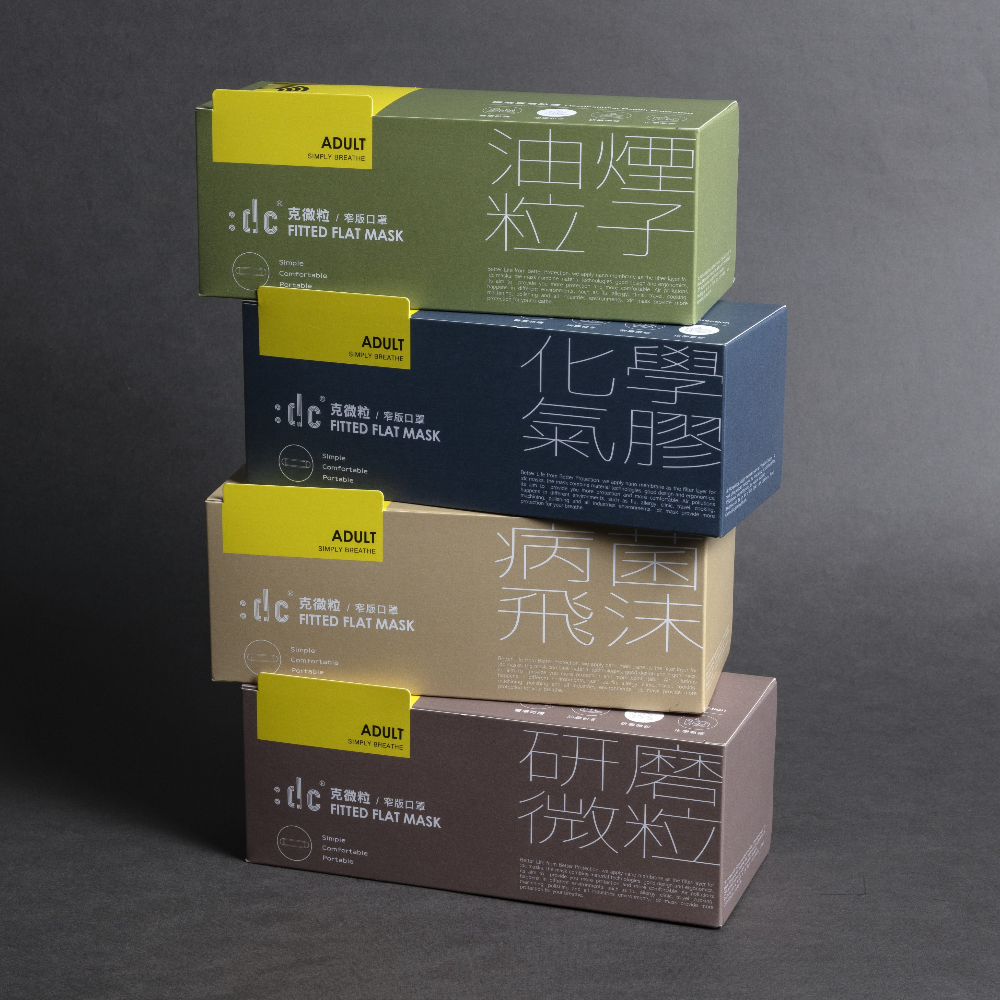



Mask Comparison: Medical vs. Industrial Protection
In the post-pandemic era, many people still wear masks when walking on the street. Whether it is to prevent colds, reduce the risk of infection, manage allergies, or simply cover a bare face, surgical masks remain a common part of daily life.
However, this “better than nothing” mindset may expose us to serious health risks at the most dangerous moments—especially in occupational and indoor environments with high levels of air pollution.
For workers who are exposed daily to cooking oil fumes, nail dust, CNC oil mist, printing solvents, and toner particles, wearing only a surgical mask may create a false sense of protection.
1. The Filtration Limits of Surgical Masks
The surgical mask most people wear was originally designed to block bacteria carried by respiratory droplets, roughly around the size of PM3 particles. It acts like a barrier against saliva and droplets, but its protection is very limited when facing finer dust, oil aerosols, and chemical particles.
Most surgical masks use electrostatic melt-blown fabric as the filter material. However, electrostatic filtration can weaken over time, causing filtration efficiency to drop significantly. In addition, electrostatic filters offer very limited resistance against oily particles such as cooking fumes or industrial oil mist.
Filtration limitation:
For PM2.5 and workplace pollutants—such as kitchen oil fumes, nail filing dust, industrial dust, CNC cutting oil mist, spray paint mist, or strong solvent odors—the protection provided by a typical surgical mask is extremely limited. In high-risk environments, it may be almost like leaving the door wide open.
Pollution type:
The melt-blown filter material used in surgical masks is not designed for oil mist environments. Oil mist requires filter materials with oil-resistant performance.
Structural weakness:
Most surgical masks have a flat design. Gaps often appear around the cheeks and nose bridge, allowing polluted air to leak in without passing through the filter.
2. Four Major Health Risks in Occupational Environments
Many people assume that pollution only comes from factory chimneys or vehicle exhaust outdoors. But we often overlook the daily occupational exposure that happens in enclosed indoor workplaces.
A simple way to assess your work environment is this:
if your workplace has a strong smell, visible haze in the air, or dust collecting around the space, you should pay closer attention to air pollution and respiratory protection.
Most workplace pollutants are nano-sized or submicron particles, often smaller than PM1.
Food service and CNC oil mist:
Oily particles can quickly neutralize the electrostatic charge of a filter, causing filtration efficiency to drop sharply.
Nail dust and processing dust:
Fine dust generated from grinding, filing, or polishing can pass through gaps in surgical masks and reach deep into lung tissue.
Printing and spray-painting solvents:
Volatile organic compounds (VOCs) are extremely small. Surgical masks cannot adsorb chemical odors or solvent vapors effectively.
High-pollution environments:
When pollutant concentrations are high, mask fit becomes even more important. Flat masks have a high leakage risk, allowing pollutants to enter the lungs through gaps around the face.
3. Protect Your Own Lungs: Why Upgrading to FFP2 Professional Respiratory Protection Matters
The main purpose of industrial PM2.5 respirators is to prevent nano-sized environmental particles from entering the lungs and causing long-term health damage.
The fundamental difference between an industrial respirator, such as the technical protection offered by mask, and a surgical mask lies in filtration performance, fit, and protection design.
Filtration efficiency:
Industrial PM2.5 respirators are designed to filter nano-sized particles, including particles as small as PM0.075. Depending on the application, users may choose oil-resistant protection such as the U.S. P95 standard, non-oil protection such as N95, or European personal respiratory protection such as FFP2.
Fit and sealing performance:
A three-dimensional structure is designed to follow the contours of the face and improve fit. With a facial seal of over 90%, more of the air you breathe passes through the filter layer instead of leaking in through gaps.
Multi-layer protection:
Professional respirators are designed to protect against PM2.5 and even smaller submicron particles. Some specifications may also include an additional activated carbon layer to help adsorb volatile gases, reducing irritating odors and fine dust that surgical masks cannot effectively block.
Professional workers need more than skills—they also need to care for their long-term health.
A long career starts with professional breathing protection. From today, choose the right respiratory protective equipment to protect your health, your lungs, and your working life.